News
Revolutionizing Precision: Digital Balances Transforms Laboratory Workflows
Revolutionizing Precision: Digital Balances Transforms Laboratory Workflows
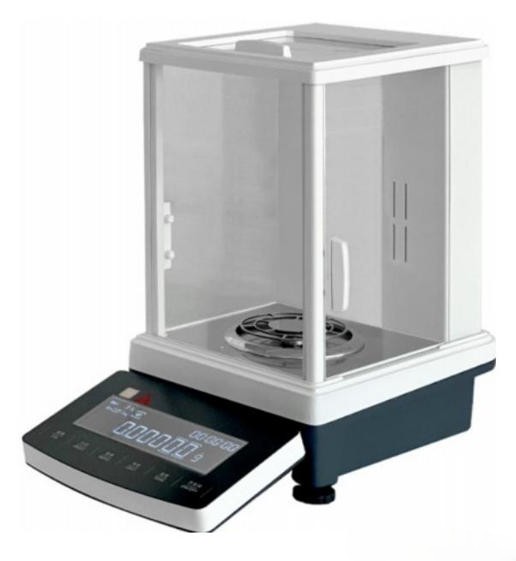
In an era where accuracy can mean the difference between a groundbreaking discovery and a costly setback, the laboratory professional's most trusted ally—the digital balance—is undergoing a quiet revolution. Today's advanced digital balances are no longer mere measuring devices; they have evolved into intelligent, connected, and workflow-integrated systems essential for modern science.
Gone are the days of simple readouts. The latest models feature touchscreen interfaces with intuitive software, guiding users through complex procedures like statistical quality control, density determination, and dynamic weighing. Connectivity is paramount, with seamless Wi-Fi and Ethernet integration allowing for direct data transfer to Laboratory Information Management Systems (LIMs), electronic lab notebooks (ELNs), and cloud storage. This eradicates transcription errors and streamlines data integrity, a critical factor in regulated environments like pharmaceutical and cannabis testing labs.
"Precision is a given. What labs demand now is efficiency, compliance, and intelligence," says Dr. Elena Vance, a lead instrumentation specialist at BioPrecise Solutions. "The modern digital balance acts as a data hub. It can enforce user authentication via ID cards, maintain fully auditable logs for 21 CFR Part 11 compliance, and even alert technicians to calibration schedules or environmental disturbances."
Sustainability and ergonomics are also at the forefront. New designs incorporate durable, easy-to-clean materials to prevent cross-contamination and feature energy-saving modes without compromising startup speed. Advanced anti-vibration technology and draft shields ensure reliable results even outside traditional controlled benchtop environments, supporting fieldwork and educational settings.
The impact is profound across sectors. In pharmaceutical research, micro and ultra-micro balances with sub-microgram resolution are enabling the precise formulation of next-generation mRNA therapeutics. In material science, high-capacity precision balances facilitate rigorous quality checks in advanced alloy production. Even in food science, fast-checkweighing balances with rapid stabilization times are optimizing packaging lines and ensuring compliance with stringent labeling laws.
As laboratories worldwide embrace automation and the Internet of Things (IoT), the digital balance is becoming a foundational node in the smart lab ecosystem. The future points toward balances with enhanced artificial intelligence—capable of predictive maintenance, recognizing weighing patterns, and offering procedural suggestions.
For the laboratory professional, this evolution signifies a shift from manual operator to data conductor. The digital balance has transformed from a standalone tool into an integrated partner, empowering scientists to focus less on the act of measurement and more on the analysis, innovation, and discovery that measurement enables. The standard for precision has been raised—and it is now connected, intelligent, and indispensable.
RELATED NEWS
NEWS CATEGORIES
LATEST NEWS
- Differences of Cantilever‑Beam and …
- Mooney Viscometer: Quality Indicato…
- Factors Causing Instability of the …
- Functions of Carbon & Sulfur Analyz…
- In-depth Analysis of Gas Chromatogr…
- Application of contact angle tester…
- Test Method for Sealing Performanc…
- Bottle Cap Torque Tester…
- Hardness testing of metallic materi…
- Applications of melt flow indexer…
- Introduction of new Hydraulic Flat…
- Guide to Maintenance of Drainage Sy…
- Constant Temperature and Humidity C…
- Common Faults and Solutions for COD…
- Tape peeling test of tensile testin…
- Understanding the sampling frequenc…
- Application of melt flow indexer (…
- Revolutionizing Precision: Digital …
- Application Solution for Oil and Fa…
- A Critical Tool for Ensuring Mater…
Contact
CONTACT USName: Jennifer
Mobile:+86 13336040868
Tel:+86 13336040868
Whatsapp:+86 13336040868
Email:sales@iqctest.com
Add:No.51 of Xiba Road,Wuchang Street, Yuhang District, 311100 ,Hangzhou City, China