News
Constant Temperature and Humidity Chamber Compressor Lubricating Oil Replacement and Troubleshooting
As a core testing device in laboratories, the stable operation of the compressor in a temperature and humidity chamber directly determines the accuracy and lifespan of the equipment's temperature and humidity control. Lubricating oil is the key medium ensuring the normal operation of the compressor's mechanical components. This article focuses on the key points of lubricating oil replacement and fault prevention strategies for temperature and humidity chamber compressors. Combining the actual needs of laboratory equipment operation and maintenance, it elaborates on the replacement cycle, specifications, and fault prediction methods for lubricating oil, aiming to help laboratory maintenance personnel scientifically maintain compressors, reduce equipment failure rates, and extend the overall service life of the machine.Function and Replacement Cycle: The crankshaft, piston, bearings, and other moving parts inside the compressor rely on lubricating oil for lubrication, cooling, sealing, and rust prevention. The degradation of lubricating oil performance directly leads to accelerated wear of components, increased operating resistance, and even compressor seizure. In laboratory settings, if the temperature and humidity chamber is subjected to frequent start-stop cycles and alternating high and low temperature operation, the deterioration rate of the lubricating oil will accelerate. Under normal operating conditions, it is recommended to replace the lubricating oil every 18-24 months. If the equipment is used in high-load testing scenarios (operating for more than 12 hours per day), the replacement cycle should be shortened to 12-18 months. Before changing the lubricating oil, ensure the compressor is stopped and completely cooled to avoid safety risks caused by operating at high temperatures.
Standard Operating Procedures: Lubricating oil changes must follow a strict procedure. First, turn off the main power supply to the equipment and drain any remaining refrigerant from the compressor. After the system is depressurized, remove the drain plug to completely drain the old oil. Collect the waste oil during this process to avoid contaminating the laboratory environment. When adding new oil, use the type recommended by the compressor manufacturer. The amount added must conform to the standard value indicated in the equipment's technical manual. This can be observed through the oil level sight glass, ensuring the oil level is between 1/2 and 2/3 full (≤ ≤ ≤ ). After adding the oil, test run the compressor for 5-10 minutes to check for leaks, abnormal noises, or other abnormalities. Record the replacement time and oil type, and establish an equipment maintenance record.
illustrates the lubricating oil replacement and fault prevention for compressors in constant temperature and humidity chambers.
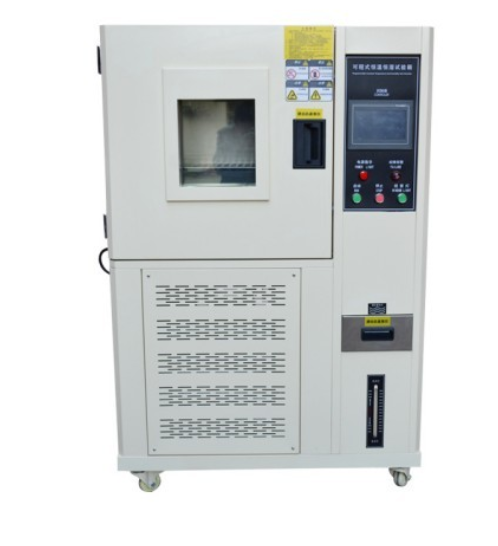
Fault Prevention Strategies: During routine maintenance, potential compressor faults can be predicted by observing the lubricating oil condition. If the oil turns black, emulsifies, or has sediment, it must be replaced immediately, and the system should be checked for refrigerant leaks, moisture intrusion, or other problems. If the compressor experiences abnormal temperature rise and increased noise during operation, combined with rapid oil deterioration, the oil circuit should be checked for blockages or excessive component clearances. Furthermore, the laboratory should maintain a clean compressor operating environment, regularly cleaning the cooling filter to prevent dust accumulation that leads to poor heat dissipation and indirectly accelerates lubricating oil aging. Frequent compressor starts and stops should also be avoided to reduce oil oxidation and decomposition at high temperatures.
Summary: Lubricating oil maintenance for compressors in constant temperature and humidity chambers is a core aspect of the equipment's lifecycle management. Scientifically controlling the replacement cycle, standardizing replacement procedures, and combining this with daily monitoring of the lubricating oil condition can effectively reduce the incidence of compressor seizure, bearing wear, and other faults. Laboratory maintenance personnel need to pay attention to the management of compressor lubricating oil and integrate preventive maintenance into the daily equipment management process to ensure the long-term stable operation of the constant temperature and humidity chamber and provide reliable equipment support for laboratory testing work.
RELATED NEWS
NEWS CATEGORIES
LATEST NEWS
- Differences of Cantilever‑Beam and …
- Mooney Viscometer: Quality Indicato…
- Factors Causing Instability of the …
- Functions of Carbon & Sulfur Analyz…
- In-depth Analysis of Gas Chromatogr…
- Application of contact angle tester…
- Test Method for Sealing Performanc…
- Bottle Cap Torque Tester…
- Hardness testing of metallic materi…
- Applications of melt flow indexer…
- Introduction of new Hydraulic Flat…
- Guide to Maintenance of Drainage Sy…
- Constant Temperature and Humidity C…
- Common Faults and Solutions for COD…
- Tape peeling test of tensile testin…
- Understanding the sampling frequenc…
- Application of melt flow indexer (…
- Revolutionizing Precision: Digital …
- Application Solution for Oil and Fa…
- A Critical Tool for Ensuring Mater…
Contact
CONTACT USName: Jennifer
Mobile:+86 13336040868
Tel:+86 13336040868
Whatsapp:+86 13336040868
Email:sales@iqctest.com
Add:No.51 of Xiba Road,Wuchang Street, Yuhang District, 311100 ,Hangzhou City, China