News
Functions of Carbon & Sulfur Analyzers
1. Significance of Carbon & Sulfur in Ferrous Materials
- Materials with carbon content above 1.70% are defined as cast iron; those below 1.70% are steel.
- High-carbon steel: carbon content > 0.60%
- Medium-carbon steel: carbon content 0.25% ~ 0.60%
- Low-carbon steel: carbon content < 0.25%
- Industrial pure iron: carbon content < 0.04%
- Ordinary steel: S < 0.050%
- Tool steel: S < 0.045%
- High-quality steel: S < 0.020%
Given the vital impact of carbon and sulfur on steel quality and performance, carbon-sulfur analysis is of great practical importance.
2. Core Testing Principle
Working principle overview:
Samples are fully combusted with oxygen in high-temperature furnaces (resistance tube furnace, electric arc furnace, high-frequency induction furnace, etc.), generating CO₂ and SO₂ gas. This separates carbon and sulfur from base metals and their compounds. The concentration of CO₂ and SO₂ is measured to calculate the mass percentage of carbon and sulfur in the specimen.
3. Main Analytical Methods
3.1 Infrared Absorption Method
3.2 Volumetric Method
3.3 Gravimetric Method
3.4 Conductometric Method
3.5 Other Testing Technologies for Carbon & Sulfur in Metals
ICP spectrometry, optical emission spectrometry (OES), X-ray fluorescence (XRF), mass spectrometry, chromatography, activation analysis, each with unique merits and applicable scenarios.
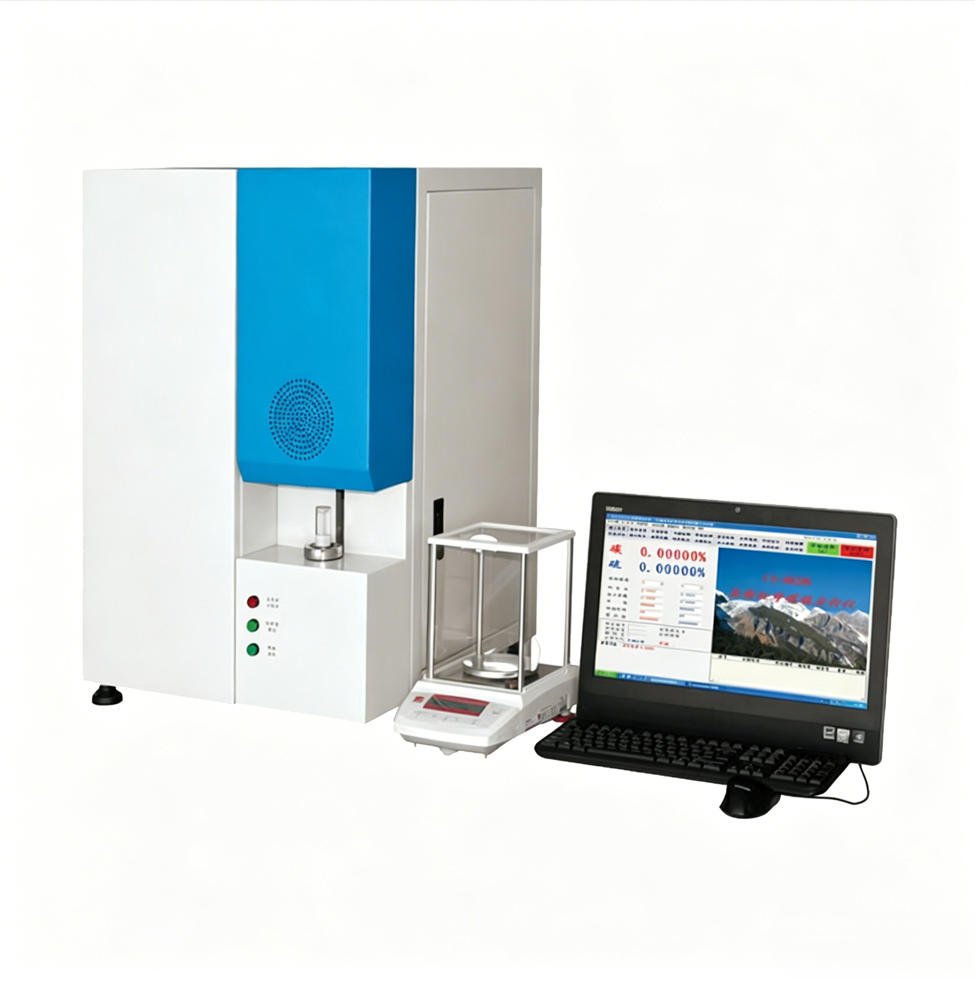
4. Main Types of Carbon & Sulfur Analyzers Widely Used in China
- Infrared Carbon & Sulfur Analyzer
- High-Speed Carbon & Sulfur Analyzer
- Non-Aqueous Titration Carbon & Sulfur Analyzer
Users may select models according to actual testing demands and the pros & cons of each instrument type.
RELATED NEWS
NEWS CATEGORIES
LATEST NEWS
- Differences of Cantilever‑Beam and …
- Mooney Viscometer: Quality Indicato…
- Factors Causing Instability of the …
- Functions of Carbon & Sulfur Analyz…
- In-depth Analysis of Gas Chromatogr…
- Application of contact angle tester…
- Test Method for Sealing Performanc…
- Bottle Cap Torque Tester…
- Hardness testing of metallic materi…
- Applications of melt flow indexer…
- Introduction of new Hydraulic Flat…
- Guide to Maintenance of Drainage Sy…
- Constant Temperature and Humidity C…
- Common Faults and Solutions for COD…
- Tape peeling test of tensile testin…
- Understanding the sampling frequenc…
- Application of melt flow indexer (…
- Revolutionizing Precision: Digital …
- Application Solution for Oil and Fa…
- A Critical Tool for Ensuring Mater…
Contact
CONTACT USName: Jennifer
Mobile:+86 13336040868
Tel:+86 13336040868
Whatsapp:+86 13336040868
Email:sales@iqctest.com
Add:No.51 of Xiba Road,Wuchang Street, Yuhang District, 311100 ,Hangzhou City, China