News
In-depth Analysis of Gas Chromatograph Operation Skills
Gas chromatograph (GC) is an indispensable analytical instrument widely applied in environmental monitoring, food testing, pharmaceutical R&D and many other industries. Mastering its operation skills can not only boost analytical efficiency, but also guarantee the accuracy and reliability of test results.
Sample pretreatment is the critical first step. For liquid samples, ensure the solution is clear and free of suspended solids. Filtration or centrifugation can be adopted to remove particles, as tiny debris may clog chromatographic columns and degrade separation performance. If the analyte concentration is too low, perform concentration via evaporation; take care to avoid over-concentration which may cause component degradation. For solid samples, select appropriate solvents for dissolution or extraction based on matrix properties. For oil-based samples, non-polar solvents such as n-hexane are commonly used. Ensure sufficient, uniform extraction to fully transfer target analytes into the liquid phase prior to injection.
Sample injection requires strict standardization. For manual injection, use a micro-syringe to draw precise sample volumes, generally ranging from 0.1–10 μL, subject to column specifications and detector sensitivity. Insert the syringe needle fully into the inlet and inject the sample rapidly and smoothly. Hesitation will lead to sample diffusion and loss. Maintain consistent injection speed and depth for repeatability. When using an autosampler, calibrate injection volume in advance, and regularly inspect syringes for clogging or abrasion to avoid injection deviation.
Proper selection and maintenance of chromatographic columns are essential. Match columns according to sample polarity and boiling points; non-polar columns like DB-5 are commonly used for non-polar analytes. New columns must be conditioned before use to eliminate residual impurities. Follow the manufacturer’s specifications for conditioning temperature and duration, typically baking under carrier gas flow for several hours at a temperature slightly higher than the maximum operating limit. During routine use, avoid overloading and contamination from particulate impurities. If peak tailing or peak splitting occurs, column performance has degraded; flush the column with suitable solvent or replace it with a new one.
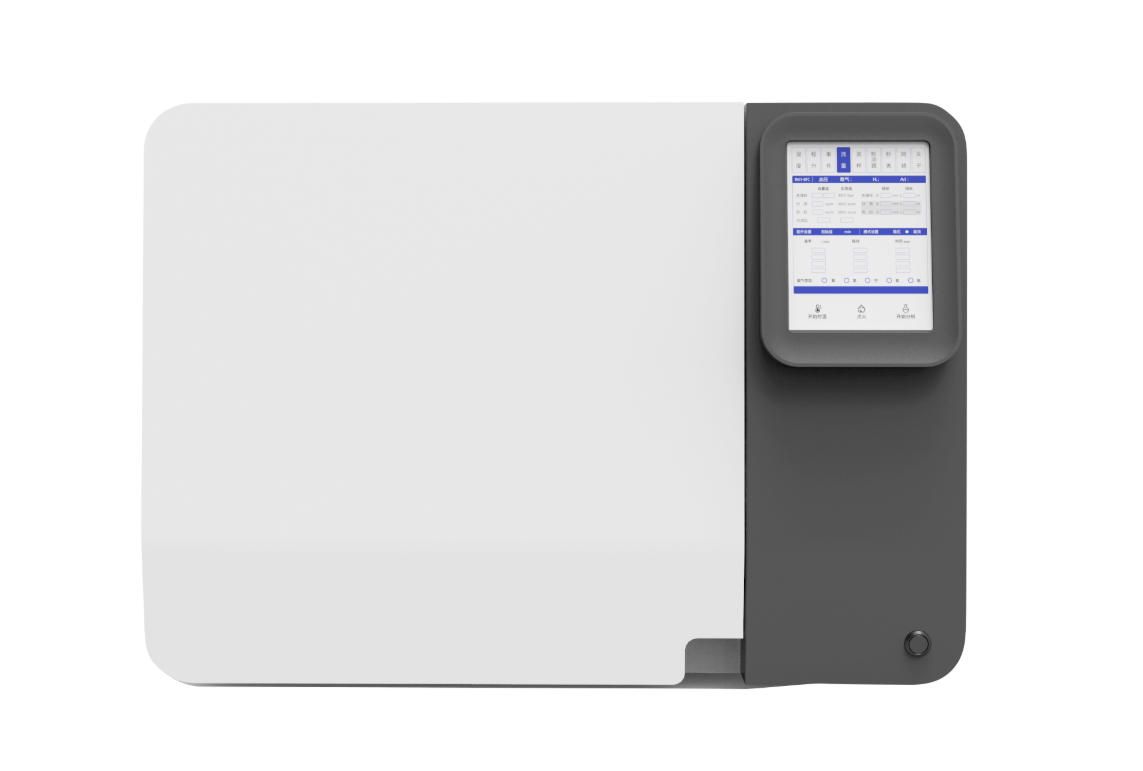
Precise control of temperature and carrier gas flow determines analytical success. The inlet temperature must be high enough to instantaneously vaporize samples, usually 50–100 °C above the boiling point of target compounds. The column oven can run at a constant temperature or a programmed temperature gradient based on sample complexity; temperature programming is recommended for multi-component mixtures to achieve satisfactory separation. Carrier gas flow must remain stable. Excessively high flow shortens analysis time but worsens resolution; overly low flow extends run duration. Regulate and calibrate gas flow via the pneumatic control system periodically.
Correct chromatogram interpretation is the final step of analysis. Identify compounds by matching retention times with reference standards or spectral libraries for qualitative identification. For quantitative analysis, external standard method or internal standard method can be adopted. For internal standardization, select a stable internal standard that is well-resolved from all sample peaks. For external standardization, ensure the calibration curve shows good linearity; calculate analyte concentrations via accurate peak area or peak height measurements.
RELATED NEWS
NEWS CATEGORIES
LATEST NEWS
- Differences of Cantilever‑Beam and …
- Mooney Viscometer: Quality Indicato…
- Factors Causing Instability of the …
- Functions of Carbon & Sulfur Analyz…
- In-depth Analysis of Gas Chromatogr…
- Application of contact angle tester…
- Test Method for Sealing Performanc…
- Bottle Cap Torque Tester…
- Hardness testing of metallic materi…
- Applications of melt flow indexer…
- Introduction of new Hydraulic Flat…
- Guide to Maintenance of Drainage Sy…
- Constant Temperature and Humidity C…
- Common Faults and Solutions for COD…
- Tape peeling test of tensile testin…
- Understanding the sampling frequenc…
- Application of melt flow indexer (…
- Revolutionizing Precision: Digital …
- Application Solution for Oil and Fa…
- A Critical Tool for Ensuring Mater…
Contact
CONTACT USName: Jennifer
Mobile:+86 13336040868
Tel:+86 13336040868
Whatsapp:+86 13336040868
Email:sales@iqctest.com
Add:No.51 of Xiba Road,Wuchang Street, Yuhang District, 311100 ,Hangzhou City, China