News
Bottle Cap Torque Tester
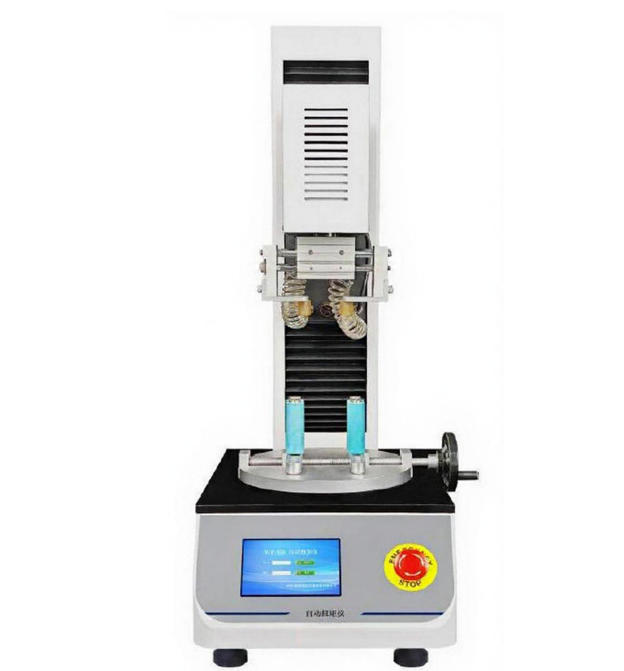
Bottle Cap Torque TesterA bottle cap torque tester (also known as a torque meter or bottle cap torque apparatus) is primarily used to measure the torque value of bottle caps on bottled products such as beverage bottles, mineral water bottles, and baby bottles during the locking and unlocking process.
Bottle cap torque testers are crucial for ensuring the sealing, quality, and consumer experience of packaged products, and are widely used in quality control processes in the food, pharmaceutical, and cosmetic industries.
I. Main Testing Applications of Torque Testers
Bottled Containers: Suitable for testing the locking and unlocking torque value of bottle caps on bottled food and pharmaceutical products (threaded connections). Examples include beverage bottles, mineral water bottles, pharmaceutical glass bottles, and liquor bottles.
Tube Packaging Products: Suitable for testing the locking and unlocking torque value of bottle caps on tube-packaged food, pharmaceutical, and cosmetic products, such as eye drop bottles, hand cream bottles, and shoe polish (threaded connections).
II. Test Principle of Bottle Cap Torque Meter
The bottle body is fixed in the lower clamping device, and the bottle cap is clamped by the upper clamping device. The bottle cap is rotated at the user-set rotation speed (or manually). The torque sensor connected to the clamping device reads the real-time torque value, thereby measuring the opening or locking force of the bottle cap.
III. Main Standards Applicable
GB/T 17876-2010 Packaging Containers - Plastic Anti-theft Bottle Caps; BB/T 0025-2004 Performance Test Method for Plastic Anti-theft Bottle Caps; BB/T 0034-2006 National Standard for Aluminum Anti-counterfeiting Bottle Caps; ASTM D2063/D2063M-24 Standard Test Method for Measuring Torque Holding Force of Continuously Threaded Sealing Packaging Using Non-Automatic (Manual) Torque Testing Equipment; ASTM D3198 Test Method for Application and Movement Torque of Threaded or Lug-type Closures; ASTM D347 and ASTM D3474-23 Standard Implementation Procedures for Calibration and Use of Torque Meters in Packaging Applications, etc.
RELATED NEWS
NEWS CATEGORIES
LATEST NEWS
- Differences of Cantilever‑Beam and …
- Mooney Viscometer: Quality Indicato…
- Factors Causing Instability of the …
- Functions of Carbon & Sulfur Analyz…
- In-depth Analysis of Gas Chromatogr…
- Application of contact angle tester…
- Test Method for Sealing Performanc…
- Bottle Cap Torque Tester…
- Hardness testing of metallic materi…
- Applications of melt flow indexer…
- Introduction of new Hydraulic Flat…
- Guide to Maintenance of Drainage Sy…
- Constant Temperature and Humidity C…
- Common Faults and Solutions for COD…
- Tape peeling test of tensile testin…
- Understanding the sampling frequenc…
- Application of melt flow indexer (…
- Revolutionizing Precision: Digital …
- Application Solution for Oil and Fa…
- A Critical Tool for Ensuring Mater…
Contact
CONTACT USName: Jennifer
Mobile:+86 13336040868
Tel:+86 13336040868
Whatsapp:+86 13336040868
Email:sales@iqctest.com
Add:No.51 of Xiba Road,Wuchang Street, Yuhang District, 311100 ,Hangzhou City, China